




Listen to the latest episode of Credit Exchange with Lisa Lee
Published in London & New York
10 Queen Street Place, London
1345 Avenue of the Americas, New York
Creditflux is an
company
© Creditflux Ltd 2025. All rights reserved. Available by subscription only.


News 2026 Outlook
‘In 2026 we will see data-centre term loans’
Creditflux: One of the big themes this year has been the worries about ‘cockroaches’ — how are you seeing this topic and how has that impacted the way you run your shop?
Lauren Basmadjian: We peaked at 4.5% default, including LMEs, in the fourth quarter last year. We are down to 3.5% — which is still high, by the way. I don’t want to say that we’re in a good place, but we are actually coming down on defaults.
We’re going to live in this 3% area for a little bit of time. It is a true default cycle, though I’m certain we’re not going back to the peak of last year.
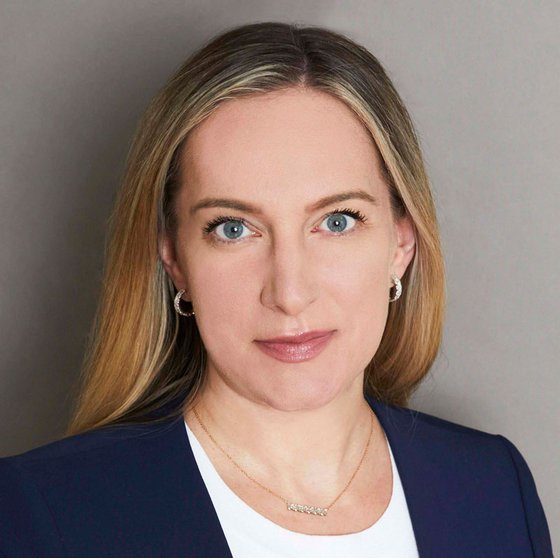

I think we finally have a pipeline that’s starting to emerge
Lauren Basmadjian
Global head of liquid credit
Carlyle
CF: What about AI disruption? Can you explain how that’s manifesting in the CLO market and what you expect going forward?
LB: It’s probably less than a handful of companies that have disappointed because of AI. Maybe five, maybe less, out of around 575 companies we lend to in the US.
That’s not a very big percentage of our portfolio where they’ve reported and said earnings are down because we’re investing in AI, or our customers are asking for price concessions because they think we should be benefiting from us investing in AI or using AI.
You are seeing total return and loan prices moving on the fear of the threat of AI to businesses. If every analyst is going to get onto the conference call and say, “What does AI mean for your business?” and if management teams don’t have a really clear answer, that is making loan prices move. And I think there’s also a lot of speculation.
But it doesn’t mean that all of our companies are going to lose either. A lot of our companies are embedded in their customers. And as long as they’re able to adapt with the times, then they can win. It’s just too early to tell.
What’s interesting is that we haven’t seen the data-centre deals yet.
CF: When are they coming?
LB: Next year. I think they’ve hit the high yield market first. I think that 2026 will be interesting where we see data-centre term loans come into the market for the first time.
CF: Do you think there’ll be good appetite for it? It seems it might be the biggest wave of financing need, perhaps ever.
LB: My guess is yes, and I think it’s going to have spread on it. That’s why there’s going to be some appetite, because our market has lost our spread.
When you see how the high yield bonds are pricing, they’ll have to put a lot of spread on it. There’ll be some people in our market that participate, just like some participated in Twitter.
CF: What do you expect for CLO issuance?
LB: A lot of warehouses are open. The data is that warehouses continue to grow.
That makes sense to me because it’s so hard to buy in secondary when over 50% of the market trades over par. So CLOs are taking longer to create because you need more new issuance and there just hasn’t been a lot of new issuance. I think we finally have an identified pipeline that’s starting to emerge.
So you’re starting to actually see a real supply calendar for the first time in a couple of years. That will help the arbitrage for new-issue CLOs, and also the speed at which you can ramp the CLO. When you see large amounts of new issue, you often do see some selling around it, as well as in the secondary. So I think that all sets up for a better picture on the supply side and the asset side for CLOs.
CF: Do you expect a busy January for yourself?
LB: On the issue side, if spreads remain where they are for CLOs, there’s still a lot to reset.
We’re still going to be looking at deals that we did in 2023 that have a higher weighted average cost of debt than where the market is today. So 2026 is going to start like 2025.
