




Listen to the latest episode of Credit Exchange with Lisa Lee
Published in London & New York
10 Queen Street Place, London
1345 Avenue of the Americas, New York
Creditflux is an
company
© Creditflux Ltd 2026. All rights reserved. Available by subscription only.


Data Secondary
Trading activity cools while credit fundamentals remain constructive
After exceptionally active secondary CLO trading in spring, June was more measured
Senior demand remains firm despite lower overall activity
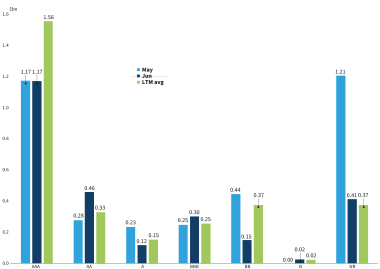
Secondary trading volumes were mixed across rating cohorts during June. Triple A volume remained remarkably stable, totalling USD 1.17bn, essentially unchanged from May. This resilience underscores the continued demand for senior floating-rate exposure despite broader market moderation.
Double A securities were one of the strongest-performing sectors from a volume perspective. Trading activity increased from approximately USD 277m in May to USD 458m in June, the highest monthly level recorded in 2026 outside of March.
1: Traded US BWIC volumes
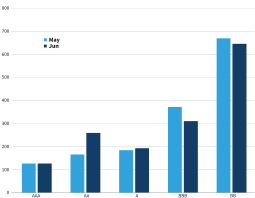
2: US BSL CLO DMs MoM (bps)
Spreads reflect stable risk appetite
Spread performance during June remained constructive despite lower turnover.
Triple A discount margins tightened modestly from 127bps to 126bps, leaving senior spreads near the tightest levels observed over the past twelve months. Double B spreads also improved, compressing from approximately 669bps to 645bps, while triple B spreads tightened significantly, from 371bps to 311bps, one of the strongest monthly moves recorded this year.
The tightening in triple B and double B spreads suggests investors remained comfortable extending risk selectively, even as overall trading volumes moderated.
Single A spreads widened modestly from 185bps to 193bps, though they remain tighter than most levels recorded in late 2025.
The primary outlier was the double A cohort, where average discount margins widened significantly.
Liquidity remains healthy
Liquidity metrics softened from exceptionally strong spring levels but remained healthy by historical standards.
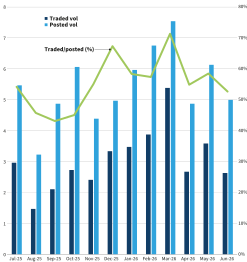
In June, approximately 53% of posted BWIC volume ultimately traded, compared with 58% in May and over 71% in March (which was one of the strongest liquidity months on record).
Despite the sequential decline, June’s traded-to-posted ratio remains comfortably above many observations from 2025, when execution rates frequently ranged between 43% and 55%.
Posted supply remained robust at approximately USD 5.0bn, indicating that market participants continued to bring risk to market.
3: US CLO BWICs trends
Outlook for the year ahead
June represented a period of normalisation rather than deterioration for the CLO market. Trading moderated after an exceptionally active spring, yet spreads remained stable or tighter across most rating categories, senior demand remained strong, and liquidity metrics continued to compare favourably with historical averages.
The persistence of tight triple A spreads, stronger triple B performance, elevated double A trading activity, and continued primary issuance, all point toward a market that remains well supported.
While seasonal factors may suppress volumes in the summer months, market technicals suggest investors remain constructive on CLO credit and willing to add exposure when opportunities emerge.
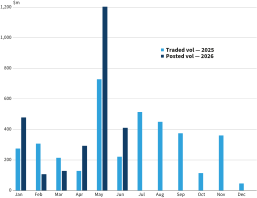
4: Traded US CLO equity
CLO equity market normalises
CLO equity trading experienced the sharpest month-over-month slowdown within the market.
Trading volume declined from approximately USD 1.21bn in May to USD 411m in June. The number of traded positions fell from 97 to 43. However, May represented one of the strongest equity trading months in recent years.
The reduction appears consistent with investors digesting the substantial equity repositioning that occurred during the spring, rather than signalling a meaningful change in sentiment toward CLO equity.
5: FINRA TRACE reported CLO/CDO volumes
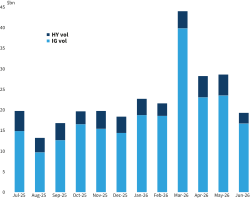
TRACE volumes reflect seasonal slowdown
Broad TRACE activity also cooled during June.
Investment-grade CLO trading totalled approximately USD 16.7bn, down from USD 23.5bn in May and substantially below March’s exceptional USD 39.9bn. High-yield TRACE volume declined to approximately USD 2.5bn, compared with USD 5.0bn in May.
Despite the decline, June’s TRACE volumes remain broadly consistent with historical norms and continue to support the view that liquidity conditions remain healthy across the secondary market.

For further information, contact Jacob Krayn, head of business development, Kopentech: Jacob.Krayn@kopentech.com
Source for all data: Kopentech, TRACE
