




Listen to the latest episode of Credit Exchange with Lisa Lee
Published in London & New York
10 Queen Street Place, London
1345 Avenue of the Americas, New York
Creditflux is an
company
© Creditflux Ltd 2026. All rights reserved. Available by subscription only.


News Analysis
Software loans face further declines as AI fears persist
by Lisa Fu
The rapid deployment of artificial intelligence is wreaking havoc with software companies that not long ago were darlings of the US leveraged loans market.
Firms that seemingly could count on an endless stream of recurring revenues are suddenly finding some of their software services obsolete as customers turn to AI applications instead.
Loans in the sector are falling as CLO managers respond by selling software names and repositioning their portfolios.
Recent software loan pricing: bid prices
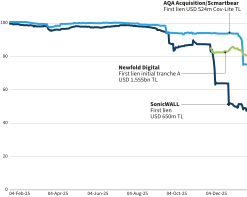
Source: S&P Global/IHS Markit data
With many credits in the tech sector now trading below par, the decline in leveraged loan prices that set in as 2025 progressed no longer looks like a temporary blip. Tellingly, there has been no noticeable rebound in loan trading levels to indicate that last year’s selling in response to AI fears was overdone.
“I think the market is definitely starting to price in some volatility,” said Edwin Wilches, PGIM’s co-head of fixed income securitised products. “The tech-sector loans will be among the largest losers of 2026, partly due to AI.”
Difficult start to January
The first weeks of 2026 have witnessed further repricing in tech names due to a combination of disappointing earnings and broader market worries, Wilches said.
Some software names have already dropped dramatically. To make matters worse, a couple of leveraged loan deals for software companies have been pulled from syndication because of investors’ worries about the sector, market sources told Creditflux. Their loss of appetite is particularly notable because CLO managers have been hungry for loan supply.
Private credit also has a headache. Private lenders, even more than leveraged loan investors, have backed fast-growing software companies with enthusiasm over the past few years. They made big bets on firms offering software as a service and, even if these businesses were loss-making, were happy to take the risk of lending against recurring revenues. That business model could now be in mortal danger because of AI.
IT services company SmartBear Software’s loan, which had already dropped a little in October, was the steepest faller in the last week of January, losing up to 18%, according to Debtwire’s Momentum Monitor.

Few managers are well versed in what is going on in AI
Edwin Wilches
Co-head of securitised fixed income
PGIM
Newfold Digital, an internet software services firm that also started to come under pressure last autumn, was another name on the list of top decliners.
SonicWall, a cybersecurity company previously targeted by short sellers because of the threat from AI, has tumbled further after reporting a drop in revenue of about 15%. An ad hoc group of lenders has hired lawyers Gibson Dunn and investment bank advisory firm Centerview Partners to advise them, Debtwire reported.
Moody’s Ratings cut SonicWall’s rating to Caa2 from B3 because of concerns about liquidity and operating performance over the next 12 months.
Howard Cohen, head of leveraged loans at Octaura, said there had been a few large liquidations on the firm’s loan trading platform and elsewhere. The number of leveraged loans trading above par declined in the last week of January, led by the tech sector, Cohen said. Many of the tech fallers were higher-coupon names and they dropped sharply.
“I would say we’re using a bit more caution as we evaluate a lot of these software companies,” said Mitch Garfin, co-head of leveraged finance at BlackRock. “The downside risk seems to be a lot more significant than it was maybe six or 12 months ago.”
As AI becomes more efficient, it will threaten certain technologies, Garfin said on the Credit Exchange with Lisa Lee podcast. The leveraged loan market has reacted even if there are just hints AI might be cannibalising a software company’s business. Bonds and loans could fall as much as five or 10 points on the immediate threat, Garfin said.
Pulling back from tech
The complex risk that AI poses to tech companies may prompt some CLO managers to underweight the sector. According to a February report from Barclays, software names comprise 12.1% of the index, but loan level data show they make up just 11.1% of US BSL CLO portfolios.
“Very few managers are well versed in what is going on in AI — the information is hard to get at,” Wilches said. He added that the top 20 largest CLO managers may find it easier to analyse AI risks because they have the necessary resources and can deal with workouts.
“This is going to be a credit picker’s market,” said Cohen. He added he was not worried, as long as the market remains liquid, permitting investors to buy and sell as they choose.
Indeed, Cohen sees an opportunity: the retreat from software companies will allow investors with conviction to buy credits at a discount.
